One of the first questions homeowners ask when considering a new asphalt driveway is simply, “how much will this cost?” It’s a fair question, but the honest answer is that it depends on several factors specific to your property. Understanding what actually drives the price helps you make sense of quotes you receive and know what you’re really paying for.
Size and Shape of the Driveway
This is the most obvious factor, but it’s worth breaking down further than just square footage. A longer, wider driveway naturally requires more material and more labor, which directly increases cost. But shape matters too. A simple rectangular driveway is generally more cost effective to install than one with curves, multiple sections, or an irregular layout, since those features require more precise work and can increase both material waste and labor time.
Excavation and Site Preparation
Before any asphalt goes down, the site needs to be properly prepared, and this step plays a bigger role in overall cost than a lot of homeowners expect. This includes removing any existing driveway material, grading the area for proper drainage, and compacting the soil to create a stable base.
Sites that require significant excavation, whether due to poor existing soil conditions, drainage issues, or the need to remove a substantial amount of old material, will cost more than a site that’s already relatively level and well drained.
The Base Layer
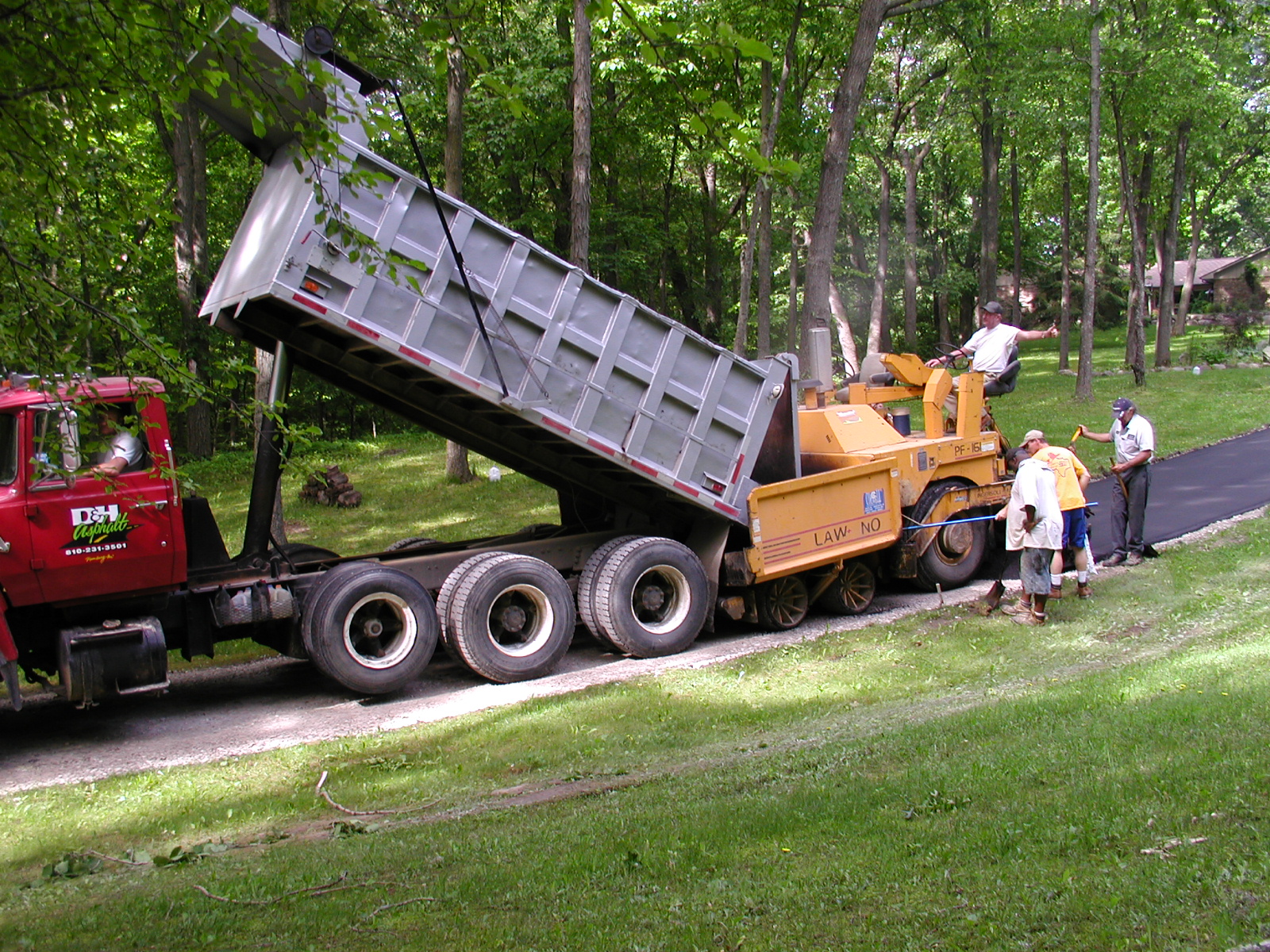
A proper asphalt driveway isn’t just a layer of asphalt poured directly onto dirt. It requires a compacted gravel or aggregate base underneath, which provides the structural support the asphalt needs to hold up over time. The thickness and quality of this base layer significantly affects both the cost and the long term durability of your driveway. A driveway with an inadequate base is one of the most common reasons asphalt fails prematurely, so this isn’t an area worth cutting corners on to save money upfront.
Asphalt Thickness
The thickness of the asphalt layer itself is a direct cost factor, since more material means a higher price. Thicker asphalt generally holds up better to heavy use and Michigan’s freeze thaw cycles, so while a thinner layer might save money initially, it can lead to more frequent repairs and a shorter overall lifespan down the road.
Material Costs and Market Fluctuations
Asphalt is petroleum based, which means its price can fluctuate based on oil prices and broader market conditions. These fluctuations are outside of any contractor’s control, but they do affect quotes, sometimes significantly from one season to the next. This is part of why getting a current quote matters more than relying on a price you might have heard from a friend or neighbor a year or two ago.
Drainage Considerations
Proper drainage is essential for a driveway’s long term performance, and a site with drainage challenges may require additional grading, drain installation, or other measures to keep water from pooling or running toward your home’s foundation. Skipping proper drainage work to save money upfront is one of the more common mistakes that leads to premature cracking and deterioration.
Access and Site Conditions
How easily equipment and materials can access your property affects labor time and, by extension, cost. A driveway with difficult access, tight spaces, steep grades, or obstacles that require extra maneuvering, can take longer to complete than a straightforward, easily accessible site.
Additional Features
Certain additions increase the overall cost of a driveway project. Decorative borders, drainage systems, extra thick sections designed for heavier vehicles, or additional parking areas connected to the main driveway all add to the total price. It’s worth discussing which of these features are genuinely necessary for your situation versus which are more about personal preference, so you can prioritize your budget accordingly.
Labor and Local Market Rates
Labor costs vary by region and contractor, and experienced crews with a strong track record may charge more than less established competitors. That said, paying for genuine expertise often pays off in the long run through better installation quality and fewer issues down the road, which matters a lot for a surface that’s meant to last 20 to 30 years when properly installed.
Timing and Seasonal Demand
Asphalt paving is seasonal work in Michigan, and demand tends to peak during the warmer months. Scheduling your project during a less busy period, when contractors have more availability, can sometimes result in more competitive pricing, though this varies by contractor and current market conditions.
Why Getting Multiple Quotes Matters
Because so many variables affect the final price, getting quotes from a few different contractors gives you a much clearer picture of what’s reasonable for your specific project. Be cautious of quotes that come in dramatically lower than others, since this can sometimes indicate corners being cut on base preparation, asphalt thickness, or material quality, all of which affect how long your driveway will actually last.
Why Cheaper Isn’t Always Better
It can be tempting to go with the lowest quote, but a driveway is a long term investment, and cutting costs in the wrong places, an inadequate base, thin asphalt, or skipped drainage work, often means facing repairs or even a full replacement much sooner than you should have to. A properly installed driveway, even at a higher upfront cost, typically ends up being the more cost effective choice over its full lifespan.
How D&H Asphalt Can Help
D&H Asphalt has been installing driveways since 1965, and we believe in giving homeowners a clear, honest breakdown of what their project actually involves and what it will cost. We don’t cut corners on base preparation or material quality, because we want your driveway to actually last.
Give us a call or fill out our form online for a free, no obligation estimate, and we’ll walk you through exactly what your specific project requires, so you know what you’re paying for before any work begins.
Frequently Asked Questions
Why does the base layer matter so much for driveway cost and durability? The base layer provides the structural support the asphalt needs to hold up over time. An inadequate base is one of the most common reasons asphalt fails prematurely, so it isn’t an area worth cutting corners on.
Does asphalt thickness really make a noticeable difference? Yes, thicker asphalt generally holds up better to heavy use and Michigan’s freeze thaw cycles. A thinner layer may cost less upfront but often leads to more frequent repairs and a shorter lifespan.
Why do asphalt prices change from one season or year to the next? Asphalt is petroleum based, so its price fluctuates with oil prices and broader market conditions. This is largely outside a contractor’s control but does affect quotes over time.
Is it worth paying more for an experienced paving contractor? Often, yes. Experienced crews may charge more, but that expertise typically results in better installation quality and fewer issues down the road, which matters for a surface meant to last decades.
Should I be concerned if a quote comes in much lower than others? It’s worth asking questions. A significantly lower quote can sometimes indicate corners being cut on base preparation, asphalt thickness, or material quality, all of which affect how long the driveway will last.
D&H Asphalt proudly serves residential and commercial customers throughout Livingston County, Oakland County, and the surrounding communities. Questions about asphalt services? Contact our team today.