Asphalt damage rarely announces itself all at once. It starts small, a hairline crack here, a faded patch there, a spot where water collects after rain that did not used to do that. Each of those signs is easy to dismiss individually, but together they tell a clear story about where the pavement is headed if nothing is done. The property owners who catch damage early consistently spend a fraction of what those who wait until the problem is impossible to ignore end up paying.
The short answer: the five most reliable early warning signs of asphalt damage are surface cracking, pothole formation, poor drainage and standing water, surface fading and oxidation, and uneven or sunken sections. Any one of these warrants a closer look, and two or more appearing together is a strong signal that professional asphalt repair should be scheduled before winter or the next heavy rain season arrives.
This article breaks down each warning sign in detail, explains what is causing it beneath the surface, and describes what professional asphalt repair involves for each condition so property owners can make informed decisions about what their driveway actually needs.
Warning Signs at a Glance
| Warning Sign | What It Indicates | Urgency Level | Typical Repair |
| Surface cracking | Oxidation, water infiltration, or base stress | Moderate to high | Crack sealing, sealcoating |
| Potholes | Base layer failure from water and traffic | High | Patching or full-depth repair |
| Standing water | Poor drainage or surface settlement | Moderate | Grading correction, resurfacing |
| Fading and gray color | UV oxidation, surface binder breakdown | Low to moderate | Sealcoating |
| Uneven or sunken areas | Subbase failure, soil erosion, drainage issues | High | Section removal and base repair |
Sign 1: Cracks in the Surface
What the Crack Pattern Tells You
Not all cracks are the same, and the pattern they form tells a contractor as much as the crack itself. Hairline cracks are the earliest stage of surface stress, typically caused by oxidation making the asphalt brittle or by minor flexing of the pavement under load. They look minor and in isolation they are, but they are the entry point that water needs to begin the deterioration cycle. Left unsealed through one winter, a hairline crack widens from the inside as freeze-thaw cycling forces water to expand within it repeatedly.
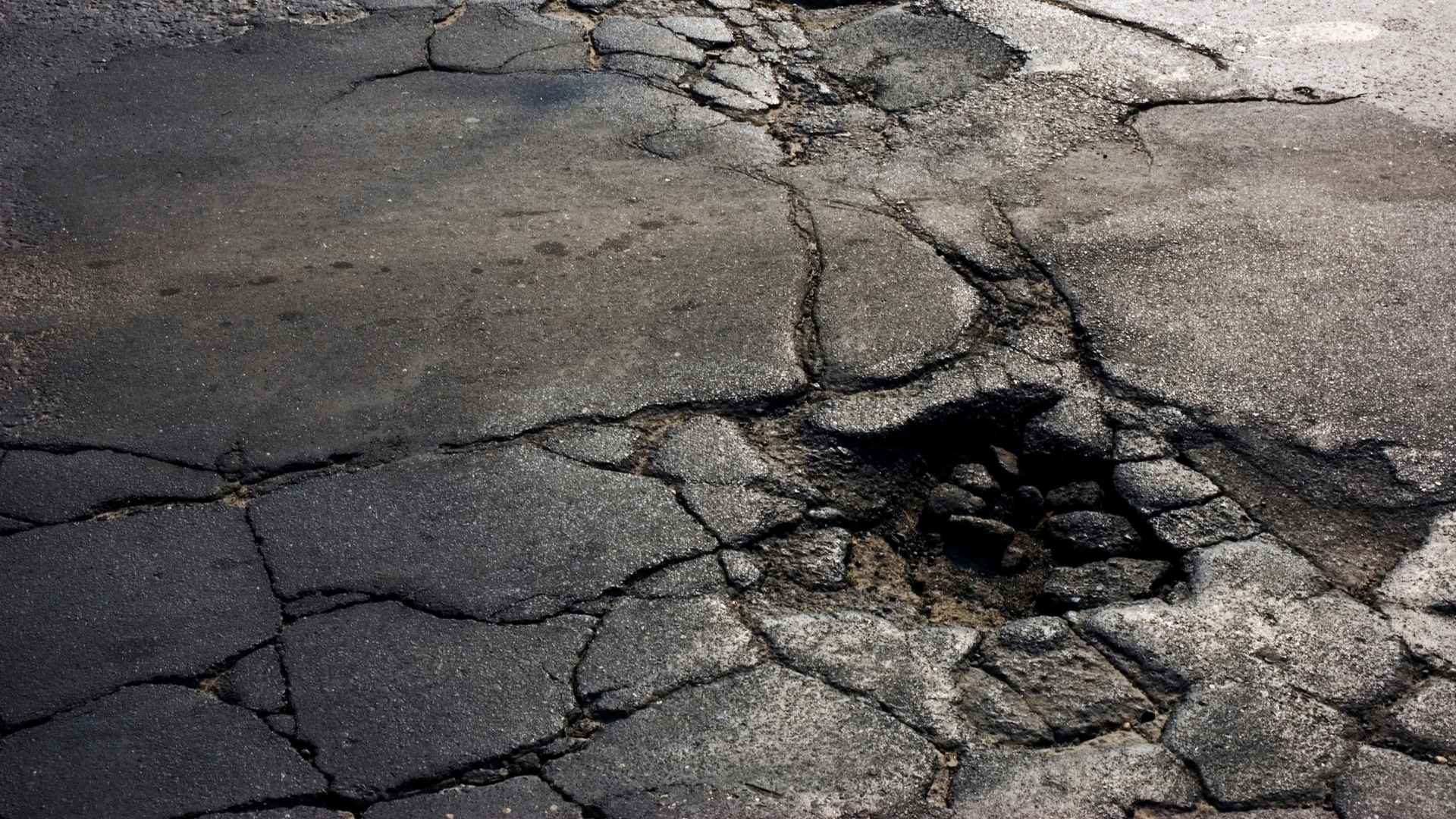
Alligator cracking, the interconnected pattern that resembles reptile scales, is a more serious indicator. It signals that the base layer beneath the asphalt has been compromised, either by water saturation, insufficient thickness, or repeated traffic load on an inadequate subgrade. No surface treatment resolves alligator cracking permanently because the problem is structural, not surface-level. Edge cracking along the perimeter of the driveway points to poor drainage, lack of lateral support, or vegetation roots working beneath the pavement edge.
Why Prompt Crack Repair Matters
According to the Federal Highway Administration, preventive maintenance steps like crack sealing can significantly extend the service life of asphalt surfaces when applied before water infiltration reaches the base layer. The cost difference between sealing a crack early and repairing the base damage that results from leaving it open through a winter season is significant in every case. A sealed crack that costs a fraction of a pothole repair is one of the clearest examples of preventive maintenance paying for itself.
Any crack that is wide enough to admit water, which in practice means any crack that is visible to the naked eye under normal lighting, should be evaluated and sealed before the next precipitation season. Hot rubberized crack filler applied professionally bonds to both sides of the crack and remains flexible through temperature cycling, which is what makes it effective in climates with real winters.
Sign 2: Potholes Forming
How Potholes Develop
Potholes are not a surface problem; they are the visible result of a structural failure that began below the surface. The sequence is consistent: a crack admits water, that water softens the base layer beneath the asphalt, the weakened base loses its ability to support traffic load, and the asphalt surface collapses into the void below it. By the time a pothole is visible, that process has been underway for weeks or months, and the damage extends further into the surrounding pavement than the pothole opening suggests.
Small isolated potholes can sometimes be patched effectively when the surrounding base is still sound. A pothole that keeps returning after repeated patching is telling you that the base has failed in that area and that surface patching is not addressing the actual problem. Full-depth repair, which removes all damaged material and rebuilds the section from the subgrade up, is the appropriate solution for recurring potholes and for any pothole where the surrounding pavement shows signs of alligator cracking or softness underfoot.
The Safety and Liability Dimension
Beyond the structural concern, potholes create real liability exposure for property owners. A vehicle damaged or a person injured due to a pothole on a private driveway or commercial lot is a premises liability issue, and documentation showing a known defect was left unaddressed is a difficult position to defend. Scheduling asphalt repair promptly when potholes are identified is both the financially sound and legally prudent course of action.
For commercial properties, the stakes are higher because traffic volume and pedestrian use are greater. A pothole that is present for weeks in a high-traffic retail lot is not just a maintenance problem; it is an active liability that compounds in risk with every day it goes unaddressed. Prompt repair and documented maintenance records are the most effective tools a commercial property owner has for managing that exposure.
Sign 3: Poor Drainage and Standing Water
Why Water on Asphalt Is a Problem
Asphalt is designed to shed water, not hold it. When a driveway or parking lot develops low spots where water consistently collects after rain events, that water is in constant contact with the pavement surface for hours or days at a time. That sustained moisture exposure accelerates the breakdown of the asphalt binder, softens the base layer directly beneath the collection point, and dramatically increases the rate of freeze-thaw damage during winter months when that standing water becomes ice.
Standing water that collects near the edge of the driveway also accelerates edge deterioration by saturating the soil beneath the pavement perimeter and undermining the lateral support that keeps the edges intact. Erosion of the soil beyond the pavement edge leaves the asphalt unsupported, which leads to edge crumbling and cracking that spreads inward over time.
How Drainage Problems Get Fixed
Minor drainage issues caused by surface settlement can sometimes be corrected through resurfacing work that re-establishes the correct slope across the pavement surface. More significant grading problems, where the subgrade itself is directing water toward the pavement rather than away from it, require more involved correction including regrading, the addition of drainage structures, or repositioning of downspouts and landscape features that are contributing to water accumulation on or near the pavement.
A professional asphalt contractor can identify whether the drainage issue is a surface problem or a grade problem during an on-site assessment. The distinction matters because treating a grade problem with a surface solution will produce results that fail as soon as the surface settles back into the underlying grade. Getting the diagnosis right before committing to a repair scope saves time and money compared to performing work that does not address the actual source of the problem.
Sign 4: Fading and Surface Oxidation
What Fading Actually Means
Fresh asphalt is a deep, uniform black because the bitumen binder that holds the aggregate together is at or near the surface and has not yet been significantly degraded by UV exposure. As the surface oxidizes, that binder dries out and recedes, and the aggregate beneath it becomes more prominent. The result is the gray, rough-textured appearance that characterizes aging asphalt. This is not just a cosmetic change; it reflects a loss of the binder that gives asphalt its flexibility and water resistance.
A surface that has oxidized significantly is more brittle than a well-maintained one and more susceptible to cracking under the same traffic and temperature conditions. The pores that were sealed by fresh binder are now open and admitting water and chemicals. Fading is the early warning that the surface is losing its protective capacity and that sealcoating, applied before cracking develops, is the most cost-effective intervention available at that stage.
Sealcoating as the Appropriate Response
Sealcoating applied to a faded but structurally sound surface restores the protective barrier over the asphalt, slows further UV oxidation, and gives the pavement the flexibility it needs to resist cracking under temperature cycling. It is most effective when applied before cracking develops, which is why fading is such a valuable early warning sign. A surface that is gray but still crack-free is an ideal sealcoating candidate. A surface that has already cracked requires crack sealing first, followed by sealcoating, to address both the existing damage and the protection going forward.
Sealcoating does not reverse oxidation that has already occurred, but it stops the progression and gives the remaining binder the protection it needs to last. On a well-maintained asphalt surface, consistent sealcoating every two to three years keeps the surface from ever reaching the point where significant oxidation damage has accumulated.
Sign 5: Uneven or Sunken Areas
What Causes Asphalt to Sink or Heave
Uneven asphalt is a base problem, not a surface problem. When sections of a driveway appear sunken, wavy, or noticeably lower than the surrounding pavement, it means the subgrade or base layer beneath those sections has shifted, settled, or been weakened by water saturation. Poor original installation that left the base improperly compacted, drainage problems that allowed water to saturate the subgrade, and soil erosion beneath the pavement edge are the most common causes of settlement and unevenness in residential driveways.
In climates with real winters, frost heaving is another contributor. Water in the subgrade freezes and expands upward, pushing sections of the pavement above the surrounding grade. When it thaws, the pavement settles back, but not always into the same position it started from. Repeated heave-and-settle cycles over several winters can produce significant unevenness in areas where subgrade moisture content is high due to drainage problems or soil composition.
Why Uneven Asphalt Needs Professional Repair
Surface patching does not fix uneven asphalt caused by base failure. Applying new asphalt over a sunken area without addressing the subgrade fills the depression temporarily, but the base continues to shift and the new surface follows it. The correct repair for a sunken or heaved section is to remove the affected asphalt, stabilize or replace the base material, recompact the subgrade, and repave the section with new asphalt at the correct grade. This produces a repair that addresses the actual cause rather than covering the symptom.
Uneven areas that collect standing water are particularly urgent because they combine two of the most damaging conditions, structural weakness and sustained moisture exposure, in the same location. These sections deteriorate faster than the surrounding pavement and tend to develop potholes quickly once winter freeze-thaw cycling begins. Addressing uneven areas before winter arrives is one of the highest-priority asphalt repair items a property owner can act on in the fall maintenance window.
Why Timely Asphalt Repair Saves Money
Every one of the warning signs in this article has a straightforward financial logic attached to it. Damage that is caught and addressed at the surface level costs a fraction of what the same damage costs once it has reached the base. A crack sealed for a few hundred dollars is a pothole that never forms. A pothole patched promptly is a base failure that does not spread to the surrounding pavement. A drainage issue corrected before the next winter is a resurfacing project that never becomes necessary.
The compounding nature of asphalt deterioration is what makes early action so valuable. Each season of deferred maintenance does not add linearly to the eventual repair cost; it multiplies it, because damage at each stage creates the conditions for faster deterioration in the next stage. A driveway that needed crack sealing two years ago may now need resurfacing. A parking lot that needed patching last spring may now need full-depth reclamation in multiple sections.
Regular professional inspections, ideally each fall before the winter damage season begins, are the most reliable tool for catching the warning signs in this article before they escalate. An experienced contractor can identify conditions that are not obvious from a casual visual inspection and recommend a repair scope that addresses what is actually happening beneath the surface rather than just what is visible on top of it.
Final Thoughts
Asphalt driveways and parking lots are built to last, but only when they receive the maintenance they need at the right times. Surface cracking, potholes, drainage problems, oxidation, and uneven settling are all manageable conditions when they are caught early and addressed professionally. They become significantly more expensive and disruptive when they are allowed to compound through seasons of deferred maintenance.
The most important thing a property owner can do is learn to recognize what these warning signs look like and act on them rather than monitor them. A driveway that gets a professional assessment when the first cracks appear is a driveway that stays in service for decades. One that gets attention only when the damage becomes impossible to ignore is one that costs far more to restore than it needed to.
Noticed any of these warning signs on your driveway or parking lot? Contact D & H Asphalt today for a free estimate and professional assessment before small problems become expensive ones.
Frequently Asked Questions
How do I know if my driveway needs repair or full replacement?
Surface-level damage including hairline cracking, fading, and minor potholes typically warrants repair rather than replacement, provided the base layer beneath the asphalt is still structurally sound. Widespread alligator cracking, recurring potholes in the same locations, significant uneven settling, and base layer softness underfoot are all signs that the structure beneath the surface has failed and that repair alone will not produce lasting results. A professional contractor can assess the base condition and give you an honest recommendation based on what is actually happening beneath the surface.
What is the difference between crack sealing and crack filling for asphalt repair?
Crack sealing uses a router to clean and widen the crack to a consistent profile before hot rubberized filler is applied under controlled conditions, producing a flexible, long-lasting repair that bonds to both sides of the crack. Crack filling is a simpler process that places filler material directly into the crack without routing or specialized preparation, which produces a shorter-lived result. Professional crack sealing is the appropriate method for any crack that will face winter freeze-thaw cycling, as the flexible filler expands and contracts with the pavement rather than breaking loose as a rigid material would.
Can asphalt repair be done in cold weather?
Cold patch asphalt can be applied in low temperatures and serves as a temporary fix for potholes and significant cracks during winter months when hot mix asphalt plants are not operating. It is not a permanent solution and should be replaced with a proper hot mix repair once temperatures allow. Crack sealing and sealcoating both require temperatures above 50 degrees Fahrenheit for the materials to bond and cure correctly, which is why these services are best scheduled in the spring through early fall window. Planning your asphalt repair calendar around the temperature requirements of each service type ensures the work you do lasts as long as it should.
How much does professional asphalt repair typically cost?
Crack sealing typically runs from $100 to $400 depending on the total linear footage of cracking present. Pothole repair ranges from $250 to $800 for most residential applications, depending on size and whether base repair is needed. Resurfacing a full driveway costs between $2 and $5 per square foot. Full replacement, including demolition and base reconstruction, typically runs from $7 to $15 per square foot. Getting a professional estimate based on the actual condition of your specific driveway is the most reliable way to understand what your repair will cost, and most reputable contractors offer free estimates.
How long does asphalt repair last?
The longevity of an asphalt repair depends primarily on the quality of the preparation, the method used, and whether the underlying cause of the damage was addressed. A professionally executed hot mix pothole repair on a sound base can last five or more years. Crack sealing done with hot rubberized filler typically holds three to five years. Resurfacing adds 10 to 15 years of service life when the base is properly prepared. Repairs that are applied over unresolved base problems or without adequate surface preparation will fail faster regardless of the materials used, which is why the contractor’s diagnostic process matters as much as the repair itself.
Is it worth repairing an old asphalt driveway or should I just replace it?
The answer depends on the age of the driveway, the extent of the damage, and whether the base layer is still structurally sound. A driveway that is under 20 years old with surface-level damage and a sound base is almost always worth repairing and maintaining rather than replacing. A driveway that is 25 years or older with widespread cracking, recurring potholes, and base layer problems has typically reached the end of its service life, and investing in repeated repairs produces diminishing returns compared to the value of a fresh installation. A professional assessment is the most reliable way to determine which category your specific driveway falls into.
D & H Asphalt proudly serves residential and commercial customers throughout the region. Questions about asphalt repair or any of our paving services? Contact our team today.