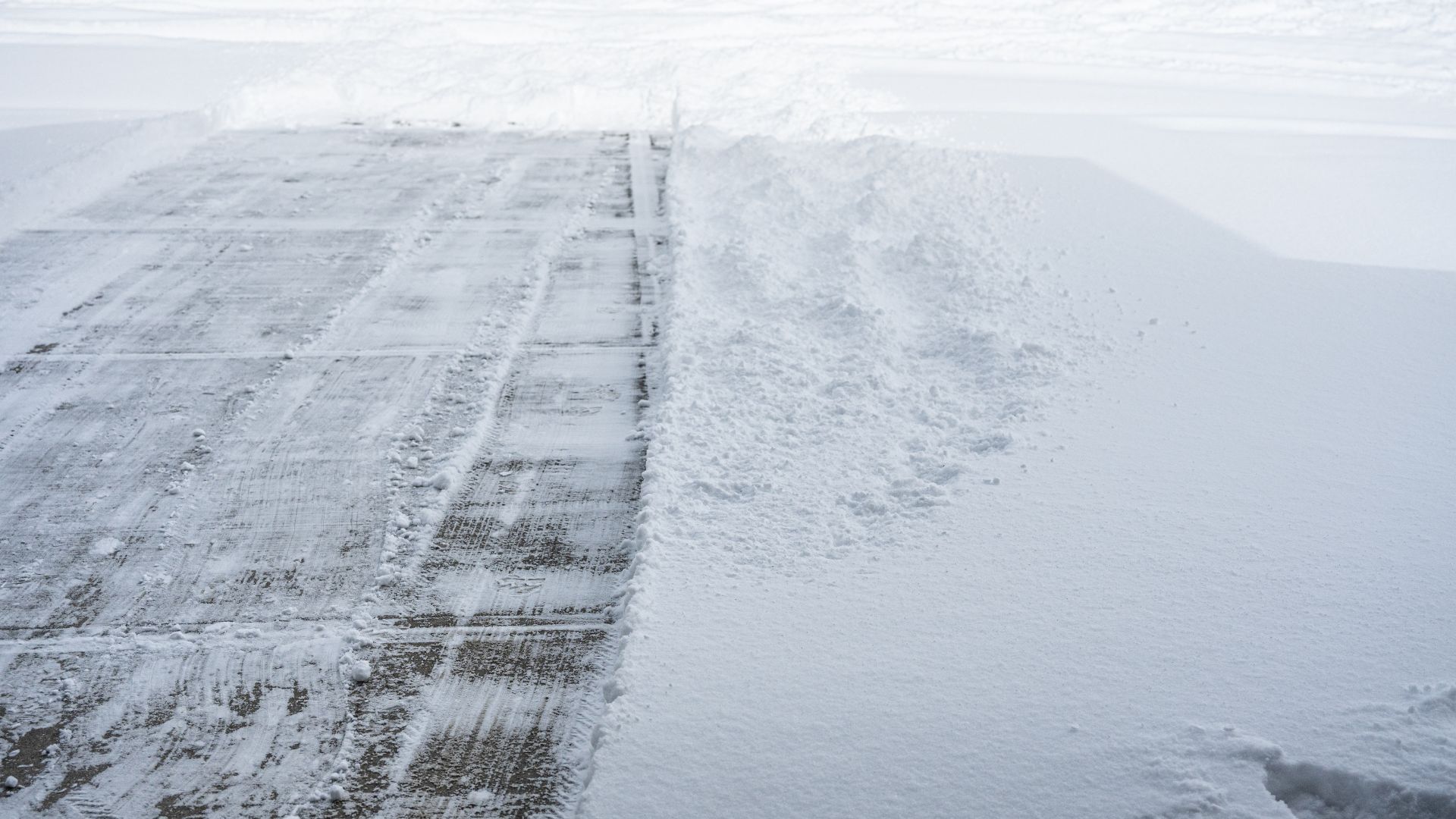
The best way to protect an asphalt driveway in winter is to clear snow early, keep shovel and plow blades slightly above the surface, go easy on deicing salt, and never chip ice with metal tools. Those four habits keep water, salt, and scraping from getting into the pavement, which is what causes most winter damage. None of them cost much, and they make a real difference by the time spring rolls around.
If you’re past the point of sealcoating this year, don’t worry. What you do from now through March matters just as much. Here are 6 ways to get your driveway through the season in good shape.
1. Clear Snow Early and Often
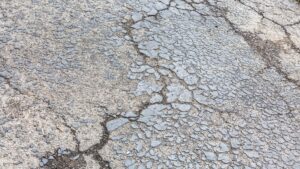
Water is the biggest enemy of asphalt. When snow melts on your driveway during the day and refreezes at night, that water works its way into small cracks and pores. When it freezes it expands, widening the crack from the inside. Do that a few dozen times over a Michigan winter and a hairline crack becomes a real problem.
Getting snow off the surface soon after it falls leaves less to melt, soak in, and refreeze. It also keeps you from packing snow into an icy layer that’s hard to remove later.
2. Keep Blades Slightly Above the Surface
Metal plow blades and sharp shovel edges that scrape directly against the pavement can tear up the surface, especially at the edges and along any existing cracks. Setting a plow blade so it rides slightly above the surface leaves a thin layer of snow, but it protects both the sealcoat and the asphalt beneath it.
If you hire a plow service, it’s worth a quick conversation. Let them know the driveway’s age and condition, and ask them to keep the blade up. If you’re doing it yourself, a shovel with a plastic or rubber edge is easier on the surface than a bare metal one.
3. Go Easy on Deicers
Salt keeps you from slipping, but it’s not free for your driveway. A research brief from the Mountain Plains Consortium found that chloride deicers such as sodium chloride, calcium chloride, and magnesium chloride can adversely affect asphalt pavement durability, particularly when combined with freeze thaw cycles. Their testing even found that lower concentrations could be more damaging in some cases.
You don’t have to give up deicer altogether. A few habits help:
- Shovel first, then spread. Salt works best on a thin layer of ice, not under a foot of snow
- Use less than you think you need and spread it evenly
- Sweep up excess in spring so it doesn’t sit on the surface
- Use sand or another traction material on slick spots where you only need grip
4. Don’t Chip at Ice With Metal Tools
When there’s a stubborn patch of ice, it’s tempting to attack it with a metal shovel, pick, or ice chopper. That’s one of the easiest ways to gouge asphalt. A gouge becomes a new place for water to get in.
Instead, let thin ice melt on sunny days, put down a little traction material, or use a plastic shovel to lift loosened ice. Patience is cheaper than patching.
5. Watch Where Water and Snow Go
Look at where your downspouts empty and where you pile snow. If the water from your roof or from a big snow pile drains across the driveway, it’s going to sit on it, freeze, and thaw over and over.
Some quick fixes:
- Point downspouts away from the driveway
- Pile plowed snow on the lawn side, away from cracks and low spots
- Keep storm drains and the edges of the driveway clear so water has somewhere to go
- Notice where puddles form in winter, since these low spots often tell you where drainage needs work
6. Take Notes Now, Plan for Spring
Winter is the perfect time to find out what shape your driveway is in. As the snow melts, notice cracks, soft spots, crumbling edges, or places where water sits. Take photos and jot down where they are. This makes your spring inspection much faster and gives you a clear baseline.
Spring is also the right time to act on what you find. Spring through early fall is the ideal window for asphalt work in Michigan, because warmer temperatures let the asphalt cure properly. Early spring is a good time for sealcoating, and small repairs are best handled before they have a chance to grow. If your driveway was paved this year, hold off on sealcoating. A brand new driveway needs time to cure first, so it’s usually best to wait about 6 to 12 months.
When to Call D&H Asphalt
You don’t have to wait for spring if something looks wrong. Call us if you notice:
- Large or widening cracks
- Sunken or soft areas
- Crumbling edges
- Water that pools and doesn’t drain
- Potholes that keep coming back
Our estimates are free, and we can look at your property year round to tell you what it needs and the best timing. Call us at (810) 231-3501, Monday through Friday, 9am to 5pm, or schedule a free estimate online.
Frequently Asked Questions
How do I protect my asphalt driveway in the winter? Clear snow early, keep plow and shovel blades slightly above the surface, use deicer sparingly, and avoid chipping ice with metal tools. Also make sure water drains away from the driveway.
Is salt bad for an asphalt driveway? Research suggests chloride deicers can adversely affect asphalt durability, especially with repeated freeze thaw cycles. Using less, shoveling first, and sweeping up leftovers in spring all help.
Can I use a metal shovel on my asphalt driveway? You can, but it’s easy to scrape or gouge the surface. A plastic or rubber edged shovel is gentler, and lifting snow is better than scraping it.
Should I sealcoat my driveway in winter? No. Asphalt work needs warmer weather to cure properly, so sealcoating belongs in spring through early fall.
When should I sealcoat a brand new driveway? Usually about 6 to 12 months after it’s paved. A new driveway needs time to cure first.
Why does my driveway crack every winter? Water gets into small cracks and pores, freezes, and expands, which widens the crack from the inside. Sealing cracks early and keeping water off the surface slows the cycle.
D&H Asphalt has been serving Livingston, Western Oakland, and Washtenaw counties from Hamburg since 1965. Questions about our asphalt services? Contact us today through our website or give us a call!