When it is time to install or replace a driveway, the choice between asphalt and concrete comes up for nearly every property owner. Both materials are durable, widely available, and capable of lasting decades with proper care. But they perform very differently depending on climate, budget, and how much maintenance a property owner is willing to commit to, and choosing the wrong one for the wrong situation produces a driveway that costs more over time than the better option would have.
The short answer: asphalt is the stronger choice for cold climates, tighter budgets, and properties where ease of repair matters, while concrete holds up better in hot climates, offers more design options, and typically lasts longer before replacement is needed. The right choice depends on where you live, what you plan to spend, and how you want to maintain the surface over its life.
This article compares asphalt and concrete across seven key factors: cost, installation time, durability, maintenance, appearance, weather performance, and environmental impact, and includes a side-by-side reference table to make the decision clearer before you call a contractor.
Asphalt vs. Concrete: Side-by-Side Comparison
| Factor | Asphalt | Concrete |
| Upfront cost | $3-$5 per sq. ft. | $6-$10+ per sq. ft. |
| Ready for traffic | 48-72 hours | 5-7 days |
| Expected lifespan | 20-30 years with maintenance | 30-40 years with maintenance |
| Maintenance needs | Sealcoating every 2-3 years; easier repairs | Less frequent sealing; repairs more costly |
| Cold climate performance | Excellent; flexible under freeze-thaw cycling | Prone to cracking in freeze-thaw conditions |
| Hot climate performance | Can soften and rut in extreme heat | Excellent; stays firm in high temperatures |
| Design options | Limited; standard black finish | Wide range; stamping, coloring, finishes |
| Repairability | Easy; patches blend well | Difficult; patches often visibly mismatched |
| Recyclability | 100% recyclable; widely reclaimed | Recyclable but higher production emissions |
Cost: Upfront and Over Time
Installation Cost
Asphalt is significantly less expensive than concrete at installation. A typical residential asphalt driveway runs between $3 and $5 per square foot, while concrete installation typically ranges from $6 to $10 per square foot or higher for decorative finishes like stamping or coloring. For a standard two-car driveway of 600 square feet, that gap translates to a difference of $1,800 to $3,000 or more between the two materials at the time of installation.
The upfront savings with asphalt are real and meaningful, particularly for large driveways or commercial applications where square footage multiplies the per-foot cost difference significantly. For budget-conscious property owners or those who are planning other major improvements simultaneously, the lower entry cost of asphalt frees up capital that would otherwise be committed entirely to the driveway.
Long-Term Cost Considerations
The lifecycle cost picture is more nuanced than the installation comparison suggests. Asphalt requires sealcoating every two to three years and will need resurfacing or replacement sooner than concrete in most cases, which adds to the total cost of ownership over a 30-year horizon. Concrete costs more upfront but requires less frequent maintenance and typically lasts longer before replacement is needed, which can make it the more economical choice over a very long time horizon if it performs well in the local climate.
The key variable that complicates this comparison is climate. In cold climates with significant freeze-thaw cycling, concrete cracks more frequently and repairs are more costly and visible than asphalt patches. A concrete driveway in a northern climate that requires significant crack repair over its life may ultimately cost as much or more than an asphalt driveway that gets regular sealcoating and periodic resurfacing. The total cost comparison needs to account for local climate conditions to produce a realistic picture.
Installation Time and Disruption
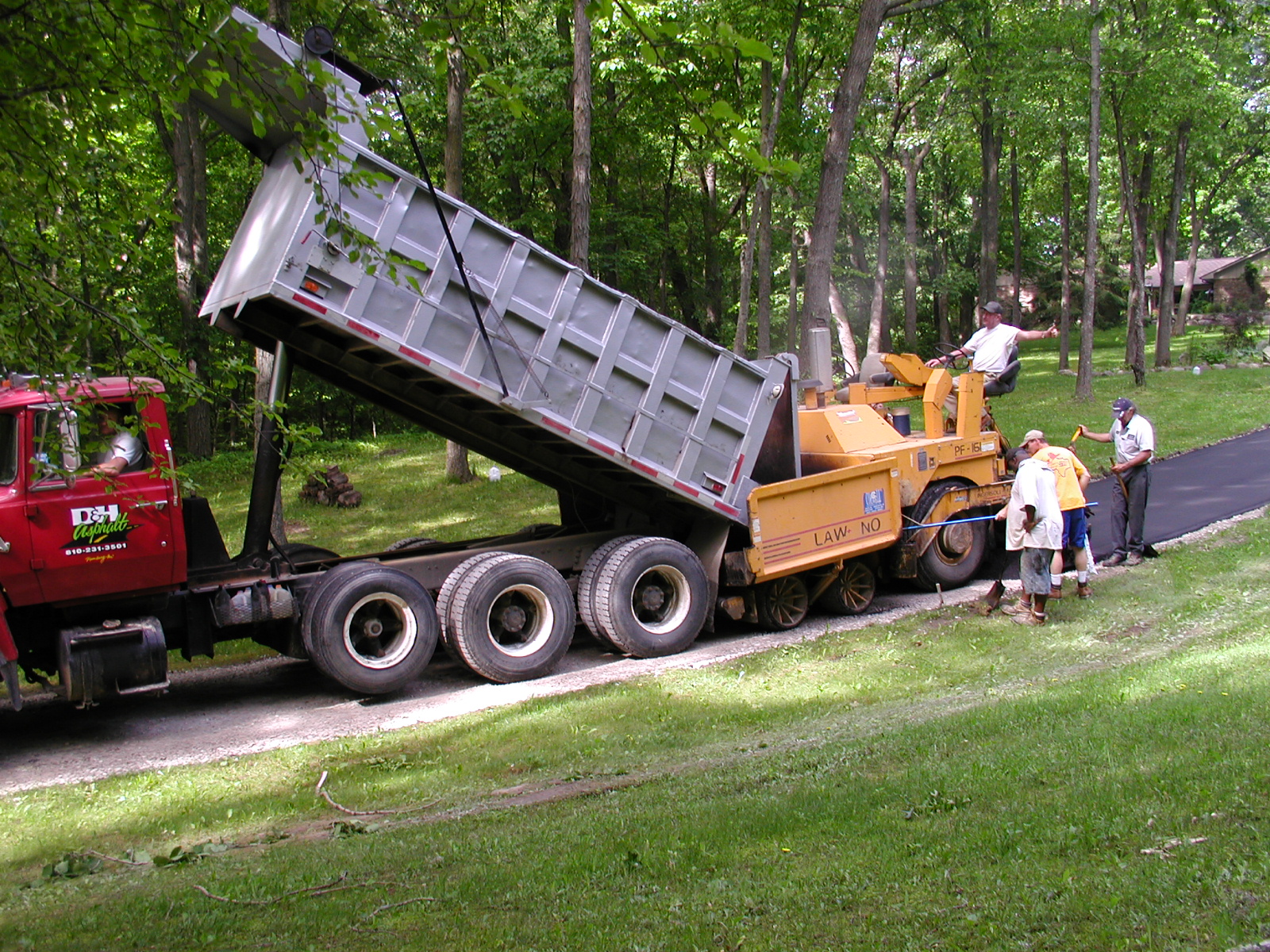
Asphalt driveways are ready for vehicle traffic within 48 to 72 hours of installation under normal temperature and weather conditions. The material sets quickly, and while the full cure continues for some weeks, the surface is functional for everyday use well within the first few days. This makes asphalt the practical choice for households or businesses where driveway access needs to be restored quickly after construction.
Concrete requires a longer cure period before it can support the weight of vehicles. Most concrete installations need five to seven days before vehicle traffic is appropriate, and full structural strength is not achieved until 28 days after placement. During that period, foot traffic can resume within 24 to 48 hours, but the driveway is effectively out of service for vehicle use for up to a week. For households without alternative parking, that timeline is a real inconvenience that factors into the material decision.
The installation process itself is comparable in complexity and duration for both materials. Both require proper base preparation, grading for drainage, and compaction of the subgrade before the surface material is placed. Cutting corners on base preparation produces premature failure in both asphalt and concrete, and this is where the quality of the contractor matters as much as the material selected.
Durability and Expected Lifespan
How Long Each Material Lasts
A properly installed and well-maintained concrete driveway can last 30 to 40 years before replacement becomes necessary. Asphalt driveways maintained through regular sealcoating and timely crack repair typically last 20 to 30 years. The gap in raw lifespan favors concrete, but the practical difference is smaller when climate is factored in, because concrete’s vulnerability to freeze-thaw damage shortens its effective service life in northern climates significantly compared to its performance in mild or warm regions.
Asphalt is a more flexible material than concrete, which gives it a meaningful advantage in conditions involving ground movement and temperature cycling. When soil beneath a driveway shifts slightly due to frost heave, moisture changes, or settling, asphalt can flex and accommodate that movement without cracking the way a rigid concrete slab would. This characteristic is why asphalt is the dominant driveway material in cold northern climates where freeze-thaw cycling is an annual constant.
Structural Failure Patterns
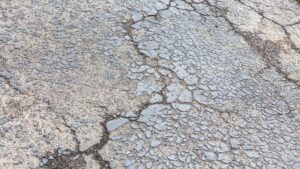
When asphalt fails, it typically does so gradually through crack development, surface oxidation, and pothole formation that can be addressed incrementally through repair and resurfacing. The failure progression is visible and manageable, and each stage of deterioration can be treated at a cost proportional to the severity of the condition. When concrete fails, it often does so through cracking that is structurally significant and visually obvious, and concrete patches are notoriously difficult to match to the original surface color and texture, leaving repairs that are permanent and visible.
The repairability difference between the two materials is a practical advantage for asphalt that the raw lifespan comparison does not capture. An asphalt surface that develops a pothole can be patched with material that blends into the surrounding surface. A concrete surface that cracks or spalls produces a repair that almost always shows as a visually distinct patch, regardless of how carefully the contractor matches the mix. For property owners who care about the appearance of their driveway over decades of use, this is a meaningful factor.
Maintenance Requirements
Asphalt Maintenance
Asphalt requires sealcoating every two to three years to maintain its protective surface, prevent UV oxidation, and resist moisture infiltration. Crack sealing should happen promptly whenever cracks develop to prevent water from reaching the base layer. These are recurring maintenance costs that are relatively modest individually but add up over the life of the driveway. The advantage is that asphalt maintenance is predictable, schedulable, and handled by widely available contractors at reasonable cost.
Repairs to asphalt surfaces are straightforward and affordable compared to concrete. A pothole or crack that requires patching in asphalt can be filled with material that compacts and blends with the surrounding surface, and the result is structurally sound and visually acceptable. The ease of repair is one of the reasons asphalt remains the dominant choice for residential driveways in climates where winter damage is a recurring reality.
Concrete Maintenance
Concrete requires less routine maintenance than asphalt in mild climates. Sealing is recommended every few years to protect against staining and surface weathering, but the interval is longer than asphalt and the maintenance cycle is less demanding. The surface does not oxidize and fade the way asphalt does, so the cosmetic maintenance requirements are lower over the life of the driveway.
Where concrete maintenance becomes expensive is in repair. Cracks that develop in concrete, whether from freeze-thaw cycling, tree root pressure, or ground movement, require specialized repair products and techniques that cost more than asphalt patching. The finished repair almost always remains visible because concrete is difficult to color-match after curing. In climates where cracking is common, this repair cost and visual outcome is a significant drawback compared to asphalt.
Appearance and Design Options
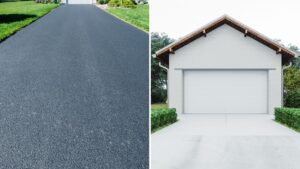
Concrete offers substantially more design flexibility than asphalt. Stamped concrete can replicate the appearance of brick, stone, slate, and other materials, and it can be colored, textinted, or finished with brushed, exposed aggregate, or polished surfaces that produce a high-end appearance. For homeowners who want a driveway that makes a strong visual statement or complements a specific architectural style, concrete provides design options that asphalt simply cannot match.
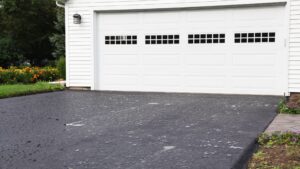
Asphalt presents a clean, uniform black surface that looks sharp when freshly laid or sealcoated and becomes progressively grayer as it ages and oxidizes between maintenance cycles. It offers no meaningful design variation; the material looks like asphalt regardless of how it is installed. For homeowners who prefer a simple, functional appearance and have no interest in decorative paving, this limitation is irrelevant. For those who view the driveway as part of the home’s overall exterior design, it is a real constraint.
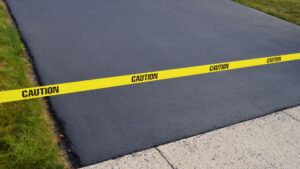
It is worth noting that freshly sealcoated asphalt makes a strong positive impression, and the visual difference between a well-maintained asphalt driveway and a neglected one is dramatic. Property owners who sealcoat consistently have a surface that looks far better than the raw material comparison suggests, even if it cannot compete with decorative concrete options in terms of design variety.
Weather Performance by Climate
Cold Climates
In regions with cold winters and significant freeze-thaw cycling, asphalt is the more durable and cost-effective choice. Its flexibility allows it to expand and contract with temperature changes and absorb minor ground movement from frost heave without cracking the way a rigid concrete slab does. Asphalt also absorbs solar heat more readily than concrete, which accelerates snow and ice melt on the surface and can reduce the amount of deicing product needed to maintain safe conditions during winter.
Concrete in cold climates is vulnerable to cracking from freeze-thaw cycling, and the deicing salts that are standard practice for winter maintenance accelerate the surface spalling and deterioration that shortens concrete’s effective service life in northern regions. A concrete driveway that lasts 40 years in a mild southern climate may need significant repair or replacement in 20 to 25 years in a climate with heavy winters and regular salt application.
Hot Climates
In regions with consistently high summer temperatures, concrete has the performance advantage. Asphalt softens in extreme heat, which can lead to surface rutting in areas that receive heavy vehicle loads or where vehicles turn frequently on the same spot. The dark color of asphalt also absorbs significantly more solar radiation than concrete, which can make the surface uncomfortably hot underfoot during summer months and contribute to the urban heat island effect in dense residential or commercial areas.
Concrete stays rigid and structurally stable in high temperatures and does not soften under the thermal load that affects asphalt. Its lighter color reflects more solar radiation, keeping the surface cooler and reducing heat absorption relative to asphalt. For properties in the southern United States or other consistently hot climates, concrete’s thermal performance is a meaningful practical advantage that justifies its higher upfront cost in many cases.
Environmental Considerations
Asphalt has a meaningful environmental advantage in its recyclability. Reclaimed asphalt pavement is one of the most recycled materials in construction; old asphalt is routinely milled, processed, and incorporated into new paving projects at high substitution rates, reducing the demand for virgin materials and keeping the material out of landfills. According to the National Asphalt Pavement Association, asphalt is the most recycled material in the United States by weight, with over 99 percent of reclaimed asphalt pavement reused in new construction annually.
Concrete production is more energy-intensive than asphalt production and generates higher carbon dioxide emissions per ton of material produced, primarily due to the cement manufacturing process. However, concrete’s longer service life means it needs to be produced and replaced less frequently over a given time horizon, which partially offsets the higher per-unit production emissions. Permeable concrete options that allow stormwater to pass through the surface rather than running off provide an additional environmental benefit in areas where stormwater management is a concern.
Both materials have legitimate environmental credentials, and the more sustainable choice depends on the specific application, local recycling infrastructure, and the climate conditions that will affect how long each material performs before replacement is needed. Property owners who prioritize sustainability should ask their contractor about recycled content in asphalt mixes or permeable paving options for either material.
Final Thoughts
Asphalt and concrete are both excellent driveway materials, and the right choice depends on the specific combination of climate, budget, maintenance preference, and aesthetic priority that applies to each property. Asphalt consistently outperforms concrete in cold climates, costs less at installation, and is far easier to repair over its service life. Concrete consistently outperforms asphalt in hot climates, lasts longer under favorable conditions, and offers design options that asphalt cannot provide.
For most properties in northern climates, asphalt is the practical and economical choice that delivers reliable performance across decades of real-world conditions. For properties in warmer regions where freeze-thaw damage is not a factor and aesthetic customization is a priority, concrete may justify its higher upfront cost. Getting input from a qualified local contractor who works with both materials and understands the specific conditions in your area is the most reliable way to make the right call for your property.
Ready to move forward with a new driveway installation? Contact D & H Asphalt today for a free estimate and honest guidance on which material makes the most sense for your property and your budget.
Frequently Asked Questions
Is asphalt or concrete better for cold weather climates?
Asphalt is the better choice for cold climates with significant freeze-thaw cycling. Its flexibility allows it to expand and contract with temperature changes without cracking the way rigid concrete slabs do, and its heat-absorbing dark surface accelerates snow and ice melt during winter months. Concrete is more vulnerable to cracking from freeze-thaw stress and is further damaged by the deicing salts that are standard in northern winter maintenance. In cold climates, asphalt consistently delivers a longer effective service life relative to its cost than concrete does under the same conditions.
How much cheaper is an asphalt driveway compared to concrete?
Asphalt typically costs between $3 and $5 per square foot installed, while concrete ranges from $6 to $10 per square foot for a standard finish. Decorative concrete options including stamping and coloring can push the cost higher still. For a 600 square foot two-car driveway, the difference between a basic asphalt installation and a standard concrete installation is commonly $1,800 to $3,000 or more. That gap narrows over time as asphalt’s maintenance costs accumulate, but the upfront savings are real and significant for budget-conscious property owners.
Which lasts longer, an asphalt or concrete driveway?
Under favorable conditions, concrete can last 30 to 40 years compared to 20 to 30 years for a well-maintained asphalt driveway. However, the practical lifespan gap is smaller than the raw numbers suggest in cold climates, where freeze-thaw damage and salt exposure significantly reduce concrete’s effective service life. A concrete driveway in a northern climate may need repair or replacement closer to 20 to 25 years of service, while a well-maintained asphalt driveway in the same climate can reach 25 to 30 years. In warm climates without freeze-thaw stress, concrete’s longevity advantage is more reliably realized.
Can you resurface asphalt without replacing the entire driveway?
Yes, and resurfacing is one of the most cost-effective options available when an asphalt driveway has widespread surface wear but the base layer is still structurally sound. Resurfacing applies a new layer of asphalt over the existing surface, which restores the appearance and performance of the driveway at a fraction of the cost of full replacement. It is not appropriate when base layer failure has occurred, which is characterized by widespread alligator cracking, soft spots underfoot, or recurring potholes in the same locations. A professional assessment can determine whether the base condition supports resurfacing or whether full replacement is the more appropriate investment.
Does concrete require maintenance like asphalt does?
Concrete requires less routine maintenance than asphalt in mild climates. Sealing is recommended every few years to protect against staining and surface weathering, but concrete does not require the regular sealcoating cycle that asphalt needs to maintain its protective surface layer. Where concrete maintenance becomes more demanding is in repair: cracks that develop are more expensive to address than asphalt cracks, and concrete patches are difficult to color-match, leaving visually obvious repairs that are permanent features of the surface. In cold climates where cracking is common, concrete’s lower routine maintenance needs are offset by higher repair costs when damage occurs.
What is the most durable driveway material overall?
Durability depends heavily on climate, installation quality, and maintenance consistency, which means there is no single answer that applies to every property. In cold climates with freeze-thaw cycling, asphalt is generally more durable in practice because it resists the cracking that shortens concrete’s effective life in those conditions. In hot or mild climates without significant winter stress, concrete is typically more durable because it lasts longer before replacement is needed and is not subject to softening in extreme heat. Installation quality is the most important single variable for either material: a well-installed asphalt driveway on a properly prepared base will outlast a poorly installed concrete driveway regardless of the theoretical lifespan comparison between the materials.
D & H Asphalt proudly serves residential and commercial customers throughout the region. Questions about driveway paving or any of our asphalt services? Contact our team today.