Asphalt is a significant investment for any residential or commercial property, and like most investments, it lasts longer when it is maintained well. Sealcoating is the most widely recommended preventive maintenance tool in the asphalt industry, yet it is also the one most commonly skipped by property owners who view it as an optional cosmetic step rather than the structural protection it actually provides.
The short answer: sealcoating protects asphalt from the UV oxidation, water infiltration, and chemical degradation that break down pavement over time, and when applied on a consistent schedule it can extend the usable life of an asphalt surface by a decade or more. The return on that investment is measurable in deferred repair costs, deferred replacement costs, and a surface that performs the way it should throughout its intended service life.
This article covers what sealcoating is, the eight most significant benefits it delivers, how often it should be applied, and what property owners should look for in a contractor before committing to a service.
What Sealcoating Is and How It Works
Sealcoating is the application of a liquid protective coating over an existing asphalt surface. The product is typically formulated from refined coal tar emulsion, asphalt emulsion, or acrylic compounds mixed with water, silica sand, and proprietary additives that improve adhesion, flexibility, and durability. When applied correctly, the coating cures to form a continuous protective membrane over the pavement surface that closes surface pores, resists moisture, and provides a barrier against UV radiation and chemical exposure.
The coating does not add structural strength to the pavement; it is a surface treatment, not a base repair. What it does is preserve the structural integrity that already exists by preventing the environmental and chemical degradation that causes asphalt to become brittle, porous, and prone to cracking over time. Think of it as a protective barrier that slows the aging process rather than reversing damage that has already occurred.
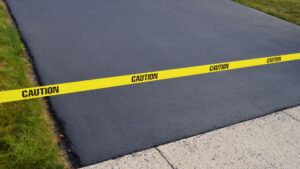
Sealcoating requires a clean, dry surface that has been properly prepped with crack sealing and debris removal before application. It is applied in one or two passes using spray equipment or a squeegee, and it requires 24 to 48 hours of cure time before vehicle traffic is allowed back on the surface. The application window is limited to conditions where temperatures are above 50 degrees Fahrenheit and no rain is expected during the cure period.
Eight Sealcoating Benefits at a Glance
| Benefit | What It Prevents | Why It Matters |
| Extended pavement life | Premature aging and oxidation | Adds 10+ years to asphalt lifespan |
| Water protection | Moisture infiltration and freeze-thaw damage | Prevents base layer failure |
| Chemical resistance | Oil, gas, and fluid degradation | Critical for commercial lots |
| UV protection | Surface oxidation and brittleness | Slows binder breakdown |
| Improved appearance | Fading and surface graying | Restores deep black finish |
| Enhanced safety | Trip hazards and reduced line visibility | Smoother surface, better markings |
| Lower maintenance costs | Crack and pothole development | Defers costly repairs |
| Strong ROI | Large capital expenditure on replacement | Small cost prevents major expense |
Benefit 1: Extended Pavement Life
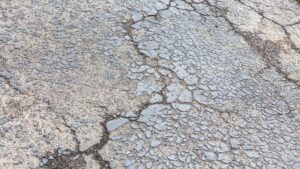
Asphalt oxidizes from the day it is laid. Exposure to UV radiation dries out the bitumen binder that holds the aggregate together, making the surface progressively more brittle and porous with each passing season. Once that binder degrades significantly, the surface loses its ability to flex under traffic load and temperature changes, and cracking follows. Sealcoating interrupts that process by placing a protective barrier between the asphalt surface and the UV radiation and oxygen that drive oxidation.
The practical result is a pavement surface that retains its flexibility and structural integrity longer than an unsealed surface exposed to the same conditions. A sealcoated driveway or parking lot that is maintained on a consistent two to three year cycle consistently outlasts an equivalent unsealed surface by a meaningful margin, often extending the time before resurfacing or replacement is needed by a decade or more. That extension represents the core financial argument for sealcoating as a maintenance investment.
Benefit 2: Protection Against Water and Freeze-Thaw Damage
Water infiltration is the primary mechanism through which asphalt pavement fails structurally. Water enters through surface cracks and pores, works its way down to the base layer, and softens the aggregate and subgrade that the asphalt depends on for structural support. In climates with cold winters, the freeze-thaw cycle accelerates this process dramatically by expanding water within cracks as it freezes and contracting it as it thaws, widening cracks from the inside with each cycle.
Sealcoating closes the surface pores and minor voids that water uses as entry points, reducing moisture infiltration significantly. According to the Pavement Coatings Technology Council, properly applied sealcoating can reduce water infiltration into asphalt pavement by as much as 70 to 80 percent compared to unsealed surfaces. That reduction translates directly into slower base layer deterioration, fewer freeze-thaw cracks, and a longer interval between structural repairs.
Benefit 3: Resistance to Oil, Gas, and Chemical Spills
Asphalt is a petroleum-based material, which creates a specific vulnerability to other petroleum products. Gasoline, motor oil, transmission fluid, and hydraulic fluid that drip or spill onto unprotected asphalt are absorbed into the surface and begin dissolving the bitumen binder from within. The result is a softened, deteriorated patch that loses structural integrity and becomes a pothole site much faster than the surrounding pavement.
A sealcoated surface is significantly more resistant to petroleum-based fluid penetration because the coating provides a non-porous barrier between the spill and the asphalt below. Spills that reach a sealcoated surface are easier to clean and cause far less lasting damage than the same spills on an unsealed surface. This benefit is particularly valuable for commercial parking lots, drive-throughs, and any property where vehicle traffic is heavy and fluid drips are a regular occurrence.
Benefit 4: UV Protection and Oxidation Prevention
UV radiation from the sun is a constant source of degradation for asphalt surfaces. The same solar energy that bleaches colors and dries out organic materials degrades the bitumen binder in asphalt, causing it to oxidize, harden, and lose the flexibility that allows it to absorb traffic stress without cracking. This process is visible in the progressive graying of asphalt surfaces over time, and it is the underlying cause of the surface brittleness that makes older asphalt so much more susceptible to cracking than newly installed pavement.
Sealcoating provides a UV-absorbing layer that significantly reduces the rate at which solar radiation reaches the asphalt binder below. The coating takes the UV punishment so the asphalt does not have to, slowing the oxidation timeline and extending the period during which the surface remains flexible and crack-resistant. Reapplying sealcoating before the previous coat has fully worn through keeps this protection continuous and prevents the asphalt from accumulating seasonal UV damage between maintenance cycles.
Benefit 5: Improved Appearance and Curb Appeal
A freshly sealcoated surface is immediately and visibly different from an aged, oxidized one. The deep, uniform black finish that sealcoating restores communicates maintenance and professionalism in a way that a faded gray surface does not. For residential properties, that appearance contributes to curb appeal and the impression the property makes on visitors and potential buyers. For commercial properties, it signals to customers and tenants that the facility is actively managed and well-maintained.
Line striping applied over fresh sealcoating is also significantly more visible than striping on a faded surface. Parking stall lines, fire lane markings, directional arrows, and accessible space designations all stand out more clearly against a dark background, which improves traffic flow, safety, and ADA compliance visibility in commercial lots. Scheduling restriping as part of the sealcoating project ensures the lot reopens with every marking fresh and clearly legible.
Benefit 6: Enhanced Safety
The safety benefits of sealcoating are practical and direct. A smooth, well-maintained surface has fewer trip hazards than a cracked and deteriorated one, which reduces liability exposure for property owners and improves the experience of anyone walking across the surface. In commercial settings where pedestrian traffic is significant, the difference between a maintained and a neglected surface is a meaningful safety variable that affects premises liability risk.
The improved visibility of surface markings after sealcoating and restriping also contributes to safety in ways that are easy to underestimate. Clearly visible stop bars, pedestrian crossing markings, and parking stall lines all reduce the potential for vehicle and pedestrian conflicts in busy parking areas. A fresh sealcoat that brings all of those markings back to high visibility simultaneously is a meaningful safety improvement beyond its role as a surface protectant.
Benefit 7: Lower Long-Term Maintenance Costs
The financial case for sealcoating is straightforward when the numbers are laid out across a maintenance timeline. A sealcoating application every two to three years costs a fraction of the crack sealing, pothole patching, and resurfacing work that an unsealed surface requires over the same period. Each service in that escalating repair sequence is more expensive than the last, and full replacement, which is the endpoint of unaddressed deterioration, is many times more costly than the preventive maintenance that would have extended the surface life significantly.
Property owners and managers who treat sealcoating as a budget line item rather than a discretionary expense consistently spend less on their paved surfaces over a ten or twenty year horizon than those who skip it and respond reactively to damage as it appears. Preventive maintenance is almost always cheaper than reactive repair, and sealcoating is one of the clearest examples of that principle in property management.
Benefit 8: Strong Return on Investment
For property managers, facility owners, and HOA boards, sealcoating is most accurately understood as a capital preservation strategy rather than a maintenance expense. Asphalt pavement is a depreciating asset, and the rate of that depreciation is directly affected by how consistently it is maintained. A surface that receives regular sealcoating retains its value and functionality longer, which defers the large capital expenditure that replacement represents.
Studies on pavement lifecycle costs consistently show that proactive maintenance programs including sealcoating reduce total lifecycle costs significantly compared to reactive approaches that address damage only after it becomes significant. The specific ROI depends on the size of the pavement asset, local replacement costs, and the maintenance interval used, but the directional conclusion is consistent: spending a modest amount consistently on sealcoating saves a substantial amount on the back end of the pavement lifecycle.
How Often Should You Sealcoat?
The standard recommendation for residential driveways in good condition is sealcoating every two to three years. Commercial parking lots that see heavier traffic and more frequent salt application typically benefit from annual or every-other-year applications in the sections that receive the most use. New asphalt should not be sealcoated for at least six to twelve months after installation, as the surface needs adequate cure time before a coating is applied over it.
Applying sealcoating too frequently can cause buildup that becomes brittle and begins to flake or delaminate, which is worse than a surface with appropriate wear. Following the recommended interval rather than applying it every year produces better long-term results. A professional contractor can assess the current condition of the surface and recommend whether reapplication is warranted based on actual surface wear rather than a fixed calendar schedule.
What to Look for in a Sealcoating Contractor
The quality of a sealcoating application depends heavily on the preparation work, the materials used, and the technique of the application itself. A contractor who skips surface cleaning, does not treat oil spots before applying the coat, or applies the sealant over open cracks will produce a result that fails far sooner than a properly executed application. Surface preparation is the most important variable in sealcoating longevity, and it is the step most commonly cut short by contractors working at low price points.
When evaluating contractors, look for documented experience with both residential and commercial properties, references from comparable projects, transparency about the specific products being used, and a clear explanation of the preparation steps included in the quote. Proper licensing and insurance are baseline requirements. A contractor who offers a detailed scope of work including prep, application passes, and cure time guidance is far more likely to deliver a lasting result than one who provides only a price and a start date.
Final Thoughts
Sealcoating is not a cosmetic treatment for aging pavement. It is a protective investment that slows the deterioration process, reduces the frequency and cost of reactive repairs, and extends the functional life of an asphalt surface that represents real value on any property. The eight benefits in this article are not independent arguments for sealcoating; they are interconnected outcomes of a single maintenance decision made consistently over time.
Property owners who commit to a regular sealcoating schedule consistently get more years and fewer repair bills out of their asphalt than those who skip it and respond to damage as it escalates. The math is straightforward, the process is well-established, and the results are visible and measurable. For any paved surface that is expected to perform reliably for decades, sealcoating belongs in the maintenance plan from the beginning.
Ready to protect your pavement and extend the life of your asphalt? Contact D & H Asphalt today for a free estimate on sealcoating services for your residential driveway or commercial property.
Frequently Asked Questions
How long does sealcoating take to dry and when can I drive on it?
Most professional sealcoating applications are dry to the touch within two to four hours under good weather conditions, meaning temperatures above 50 degrees Fahrenheit and no rain or humidity. Vehicle traffic should be kept off the surface for 24 to 48 hours after application to allow the coating to cure fully and harden before it is subjected to the weight and turning stress of vehicles. Driving on sealcoating too soon can cause tire marks, surface displacement, and tracking that compromises both the appearance and the effectiveness of the finished coat. Your contractor will advise on the specific cure time based on the product used and the day’s conditions.
Is sealcoating worth it for an older driveway?
Sealcoating is worth it for an older driveway as long as the surface still has sound structural integrity and the damage is at the surface level rather than the base. A driveway that is faded, has minor surface cracking, and feels firm underfoot is a good sealcoating candidate regardless of age. A driveway with widespread alligator cracking, recurring potholes, or sections that feel soft or spongy underfoot has structural problems that sealcoating will not address, and those issues need professional repair before a sealcoat is applied. A contractor can assess the surface condition and tell you honestly whether sealcoating is the right next step or whether repair or replacement is the more appropriate investment.
What is the difference between sealcoating and resurfacing?
Sealcoating is a surface treatment that applies a thin protective coating over existing asphalt to slow deterioration and prevent moisture and UV damage. It does not add structural thickness or repair existing damage. Resurfacing applies a new layer of asphalt over the existing pavement, adding thickness and effectively replacing the worn surface layer. Sealcoating is appropriate for surfaces in good condition that need protection and preventive maintenance. Resurfacing is appropriate for surfaces with significant surface wear, widespread cracking, or a surface layer that has deteriorated beyond what sealcoating can protect. They serve different purposes and are not substitutes for each other.
Can sealcoating be applied over cracks?
Sealcoating can be applied over cracks that have been properly sealed with crack filler, but it should not be applied over open, unfilled cracks. An open crack beneath a sealcoat remains open and continues to admit water and cause damage even though the surface above it looks intact. All visible cracks should be cleaned and filled with hot rubberized crack filler before the sealcoating application, with the filler allowed to cure fully before the coat is applied over it. A sealcoating job that skips this step looks complete but leaves the pavement vulnerable to ongoing deterioration through every unsealed crack beneath the surface.
How do I know when my asphalt needs to be sealcoated again?
The most reliable visual indicator is surface color. A sealcoated surface that is due for reapplication will have faded from deep black to gray, and the original aggregate texture of the asphalt will be visible through the worn coating. You may also notice that water no longer beads and runs off the surface as readily as it did after the last application, which indicates the waterproof barrier has thinned. Following the two to three year interval for residential surfaces is a reliable guide, and a professional assessment can confirm whether reapplication is warranted based on actual surface condition if you are unsure.
Does sealcoating require any special preparation before application?
Yes, and the preparation is the most important part of the process. The surface must be swept clean of all debris, leaves, and loose material. Oil spots need to be treated with a degreasing agent because sealcoat does not adhere to oil-contaminated surfaces and will peel in those areas within months of application. All visible cracks must be filled and cured before the coat is applied. The surface must be dry, and conditions must be appropriate, meaning temperatures above 50 degrees Fahrenheit and no rain expected for 24 to 48 hours after application. A contractor who skips or shortens any of these preparation steps will produce a result that fails sooner than a properly prepared application.
D & H Asphalt proudly serves residential and commercial customers throughout the region. Questions about sealcoating or any of our asphalt services? Contact our team today.