Every fall, property owners in cold-weather climates face the same narrow window of opportunity: get the asphalt sealcoated before the first hard freeze, or spend the spring assessing what winter did to a surface that went unprotected. It is not a dramatic decision, but it is a consequential one. Unsealed asphalt absorbs moisture, road salt, and vehicle fluids through the fall and winter season, and by the time temperatures rise again the damage is already done.
The short answer: sealcoating should be scheduled in early to mid-fall, once temperatures are consistently above 50 degrees Fahrenheit during the day and rain is not in the forecast for at least 24 to 48 hours after application. That window typically runs from mid-September through mid-October in most northern climates, and missing it means waiting until the following spring to apply the protection that would have prevented a season of deterioration.
This article covers why sealcoating before winter matters, what the application process involves, how to tell when your pavement is due, and what property owners can expect in terms of cost, timing, and results.
Why Sealcoating Before Winter Makes a Difference
What Sealcoating Actually Does
Sealcoating is the process of applying a liquid protective coating over an existing asphalt surface. The coating fills minor surface pores and hairline voids, creates a waterproof barrier that slows moisture infiltration, and provides a layer of UV protection that reduces the oxidation responsible for turning asphalt from black to gray and brittle over time. It does not repair structural damage or fill significant cracks, but it is the most effective preventive tool available for keeping a sound surface sound.
The coating also resists chemical penetration from vehicle fluids, gasoline, and the deicing products applied during winter maintenance. Asphalt that has been seal-coated sheds water more efficiently, experiences less moisture uptake during freeze-thaw cycles, and retains flexibility longer than unsealed pavement exposed to the same conditions. Over a multi-year maintenance cycle, a consistently seal-coated surface outlasts an unsealed one by a significant margin.
What Salt Does to Unprotected Asphalt
Road salt and deicing products are among the most aggressive contributors to asphalt deterioration in northern climates. When salt mixes with snowmelt, it creates a brine solution that seeps into the pores of unprotected asphalt and attacks the binder holding the aggregate together. The result is surface flaking, accelerated cracking, and a pavement surface that becomes increasingly porous and vulnerable with each passing winter season.
The Federal Highway Administration has documented that deicing salts contribute significantly to pavement deterioration, particularly in northern states where road salt use is heavy and consistent throughout the winter season. A seal-coated surface resists brine infiltration by closing the surface pores that would otherwise allow salt solution to reach the asphalt binder, which is precisely why fall application, before salt season begins, produces the most effective protection.
Sealcoating at a Glance: Key Facts for Property Owners
| Factor | Residential Driveway | Commercial Parking Lot |
| Recommended frequency | Every 2-3 years | Every 1-2 years |
| Ideal application window | Mid-Sept through mid-Oct | Mid-Sept through mid-Oct |
| Minimum temperature | 50 degrees F daytime | 50 degrees F daytime |
| Cure time before use | 24-48 hours | 24-48 hours |
| Typical cost | $300-$800 | Varies by sq. footage |
| Lifespan added | 2-4 years per application | 1-3 years per application |
How to Know When Your Pavement Is Due for Sealcoating
Visual Signs That Sealcoating Is Needed
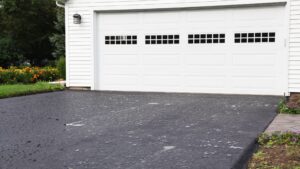
The most reliable indicator that sealcoating is overdue is surface color. Fresh sealcoating produces a deep, uniform black finish. As the coating wears, the surface fades to a lighter gray, and eventually the original asphalt aggregate becomes visible through the worn coating. When the surface has turned noticeably gray and the texture has become rough or porous to the touch, the protective barrier has thinned to the point where reapplication is needed before winter.
Small surface cracks and spiderweb patterns are another sign. These indicate that the asphalt surface has begun to dry out and lose flexibility, which sealcoating addresses by restoring a protective barrier over the surface. Water that pools and collects in the same spots after rain is also a warning sign, pointing to surface porosity or minor depressions that are accumulating moisture rather than shedding it.
Using Age as a Guide
For property owners who track maintenance dates, the recommended interval provides a reliable scheduling baseline. Residential driveways in good condition should receive sealcoating every two to three years. Commercial lots that see heavier traffic and more frequent salt application benefit from annual or every-other-year applications. The National Asphalt Pavement Association states that new asphalt should not be seal-coated until it has cured for at least six to twelve months, as sealing too early traps gases that need to escape during the curing process.
If the maintenance history of the pavement is unknown, a professional assessment can determine the current condition of the surface and advise on whether sealcoating is the right next step or whether crack sealing or other repair work should be completed first. Sealcoating over significant unrepaired cracks does not seal those cracks; it covers them cosmetically while water continues to infiltrate through them underneath.
What the Sealcoating Process Involves
Surface Preparation
Sealcoating starts with surface preparation, and the quality of that preparation determines how long the application lasts. The entire pavement surface needs to be clean and dry before any coating is applied. Debris, leaves, and loose material are blown or swept off, oil spots are treated with a degreasing agent, and the surface is inspected for cracks that need to be filled before the sealcoat goes down. Skipping surface prep is the most common reason sealcoating applications fail prematurely, as the coating cannot bond properly to a dirty or oil-contaminated surface.
Any cracks that are visible at this stage should be sealed with hot rubberized filler before the sealcoat is applied. Sealcoating is a surface treatment, not a crack repair. Applying it over open cracks leaves those cracks vulnerable to water infiltration beneath a surface that looks intact, which is worse than leaving the cracks visible because it creates a false sense of protection.
Application and Cure Time
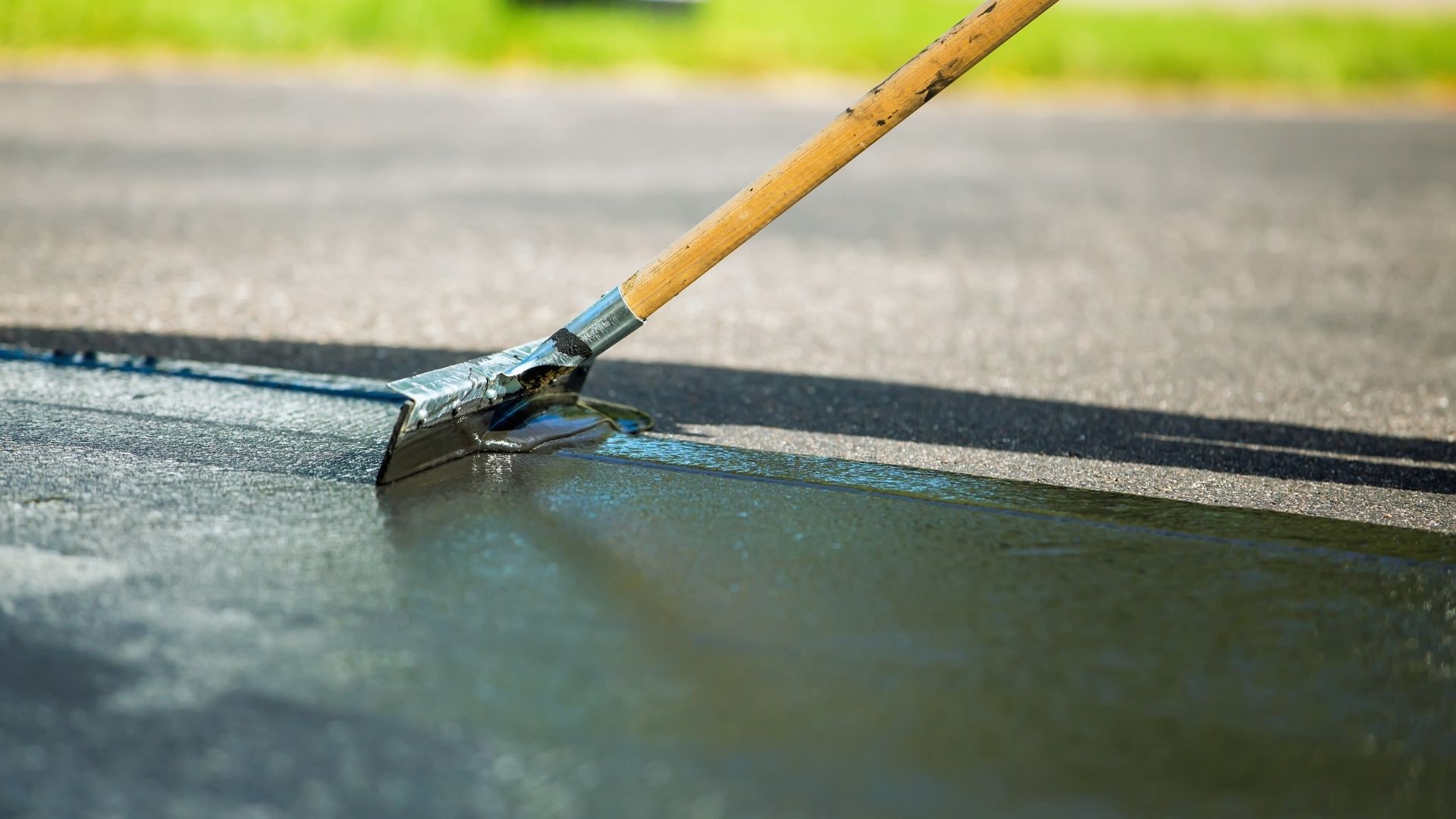
The sealcoat is applied using a spray system or squeegee depending on the surface conditions and the contractor’s equipment. Most professional applications involve two passes to ensure even, consistent coverage without thin spots that would wear through faster than the surrounding surface. Edges along landscaping, curbs, and structures are carefully masked or cut in by hand to produce a clean finish without overspray.
After application, the surface needs 24 to 48 hours to cure before vehicle traffic is allowed back on it. Pedestrian traffic can typically resume after a few hours once the surface is dry to the touch. Applying sealcoating when rain is in the forecast within 24 hours, or when overnight temperatures are expected to drop below freezing, will compromise the cure and reduce the effectiveness of the application. Scheduling with a reliable weather window is one of the most important logistical considerations in fall sealcoating.
Residential vs. Commercial Sealcoating: What Changes
Residential Driveways
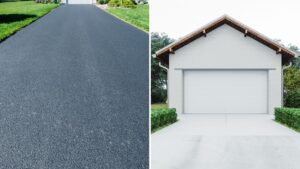
For homeowners, fall sealcoating is a relatively straightforward annual or biennial maintenance item. A typical residential driveway can be cleaned, crack-sealed, and sealcoated in a single contractor visit, and the disruption to daily routine is limited to the 24 to 48 hours the driveway needs to cure. The investment protects the driveway from salt damage during the winter season and keeps the surface in the condition where minor maintenance continues to be sufficient rather than escalating to resurfacing or replacement.
Homeowners should also pay attention to the driveway edges, which are the first areas to show wear and crumbling due to the lack of lateral support at the pavement perimeter. Edge cracking that is caught and sealed before winter is a minor maintenance item. Edge cracking that is left through a winter season often develops into more significant damage that requires patching rather than sealing.
Commercial Parking Lots
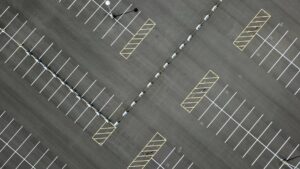
Commercial sealcoating projects require more logistical planning because the lot cannot be entirely closed during business hours without affecting operations. Experienced commercial sealcoating contractors work in phases, sealing sections of the lot while keeping others accessible to customers and tenants. Scheduling the project during lower-traffic periods, such as evenings or weekends, reduces disruption while still getting the work done within the fall window.
Commercial properties that have line striping also need to have it reapplied after sealcoating, since the new coating covers existing markings. Planning for restriping as part of the project scope ensures the lot reopens with clear lane markings, accessible space designations, and fire lane indicators all freshly applied and clearly visible for the winter season.
Common Sealcoating Myths That Cost Property Owners Money
Myth: Sealcoating Is Just Cosmetic
This is the most persistent and expensive misconception about sealcoating. While a fresh application does restore the dark, uniform appearance of the asphalt surface, the primary function is protective. Sealcoating closes surface pores that allow water and salt to reach the asphalt binder, slows the UV oxidation that causes brittleness and cracking, and resists the chemical degradation from vehicle fluids that eats away at the pavement over time. The improved appearance is a byproduct of protection, not the purpose of it.
Myth: Once Sealcoated, the Pavement Is Protected Forever
Sealcoating wears over time, just like any protective coating. Traffic friction, UV exposure, and weather gradually thin the coating until it no longer provides the same level of protection it did when fresh. The typical effective lifespan of a professional sealcoating application is two to four years depending on traffic volume and conditions, which is why the two to three year reapplication interval exists. A single application done once and never repeated will eventually wear through and leave the surface unprotected again.
Myth: Fall Is Too Late to Sealcoat
Fall is not too late; it is actually the ideal time for northern climates, provided the application happens before temperatures drop consistently below 50 degrees Fahrenheit. The common version of this myth comes from property owners who wait too long into fall and miss the temperature window, then assume the season itself was the problem. The solution is scheduling earlier in the season, not waiting until spring. An application completed in late September or early October in a typical northern climate year will cure fully before the first hard freeze arrives.
Final Thoughts
Sealcoating before winter is one of the most straightforward and cost-effective maintenance decisions a property owner can make. The application window is short, the preparation requirements are clear, and the protection it provides against salt, moisture, and freeze-thaw damage is well-documented. Property owners who sealcoat consistently spend less on repairs, defer replacement longer, and maintain surfaces that remain safe and functional through seasons that would otherwise accelerate deterioration rapidly.
The key is acting within the fall window rather than putting it off until conditions make it impossible. A surface that goes into winter properly sealed is a surface that comes out of winter in significantly better condition than one that did not. That difference, compounded over many seasons, is the difference between an asphalt investment that lasts 25 to 30 years and one that needs replacement in 15.
Do not let the fall window close without protecting your pavement. Contact D & H Asphalt today to schedule your sealcoating service before winter arrives and the opportunity is gone until spring.
Frequently Asked Questions
When is the last chance to sealcoat asphalt before winter?
The practical deadline for sealcoating in most northern climates is when daytime temperatures drop consistently below 50 degrees Fahrenheit, which typically occurs in mid to late October depending on the year. Below that threshold, the sealcoat material does not cure correctly and will not bond to the surface properly, producing a result that peels or wears prematurely. Scheduling the application in early to mid-fall, while temperatures are still reliably warm during the day, gives the coating adequate time to cure fully before cold weather arrives.
How long does sealcoating last on a driveway or parking lot?
A professionally applied sealcoat typically lasts two to four years on a residential driveway under normal use conditions, and one to three years on a commercial parking lot that sees heavier traffic. High-traffic areas such as entrance lanes, turning radii, and parking spots nearest the building entrance tend to wear faster than lower-traffic sections of the lot. Reapplying on the recommended interval, rather than waiting until the coating has fully worn through, keeps the protection level consistent and prevents the surface from going unprotected for extended periods between applications.
Does sealcoating prevent all asphalt cracking?
Sealcoating significantly slows the development of surface cracking by blocking the UV oxidation and moisture infiltration that cause asphalt to become brittle and crack over time. It does not prevent all cracking, particularly cracking that results from base layer movement, significant traffic loads, or existing structural deficiencies in the pavement. Existing cracks should be sealed before sealcoating is applied, and any structural issues should be professionally repaired before a sealcoat is expected to maintain the surface. Sealcoating is a preventive maintenance tool, not a structural repair.
Can I sealcoat my driveway myself instead of hiring a professional?
Consumer sealcoating kits are available at hardware stores and can be applied by homeowners, but the results differ in both quality and longevity from professional applications. Professional-grade sealcoating products have higher solid content and better formulation for weather resistance than consumer products, and professional application equipment ensures consistent coverage and thickness across the entire surface. A DIY sealcoat typically lasts one season before thinning or wearing unevenly. For a surface that represents a significant investment, professional application every two to three years is more cost-effective than annual DIY applications that provide inferior protection.
Should cracks be repaired before sealcoating?
Yes, always. Sealcoating is a surface coating, not a crack filler. Applying it over open cracks covers them visually while leaving them structurally open to water infiltration beneath the sealcoat. Water that enters an unsealed crack during winter will continue to cause freeze-thaw damage regardless of how good the sealcoat looks on the surface above it. All visible cracks should be sealed with hot rubberized filler before the sealcoating application, and that filler should be allowed to cure before the sealcoat is applied over it.
How long do I have to stay off my driveway after sealcoating?
Foot traffic can typically resume within a few hours once the surface is dry to the touch, usually two to four hours after application in good weather conditions. Vehicle traffic should be kept off the surface for 24 to 48 hours to allow the coating to fully cure and harden before it is subjected to the weight and turning stress of vehicles. Driving on sealcoating too soon can cause tire marks, surface displacement, and tracking that affects the appearance and uniformity of the finished surface. Your contractor will advise on the specific cure time based on the product used and the weather conditions at the time of application.
D & H Asphalt proudly serves residential and commercial customers throughout the region. Questions about sealcoating or any of our asphalt services? Contact our team today.